Playground Assembly in Pensacola, FL
Handychief assembles customer-supplied residential backyard playgrounds — swing sets, wooden and metal playsets, climbing structures, slides, and combination systems — according to the instructions for the specific manufacturer and model. Text the product link, dimensions, and yard photos for a quote.
Playgrounds & Playsets We Assemble
Customer-supplied residential backyard playground kits, built to the specific manufacturer’s instructions.
Swing Sets
Manufacturer-designed residential swing systems — swing beam, support legs, seats, chains and hangers, brackets, braces, ladders, and the accessories in the kit, assembled in the maker’s sequence. Spacing, heights, and capacities come from the specific product’s instructions, not from us.
Wooden Playsets
Towers, decks and platforms, ladders, slides, climbing walls, monkey bars, swing beams, roofs, and railings — customer-supplied wooden kits built piece by piece to the plan. We assemble manufacturer-designed systems; we don’t fabricate custom structural components.
Metal Playsets
Manufacturer-designed metal playground systems: frame, braces, fasteners, swing components, slides, and climbing pieces, with anchoring per the product instructions. Supplied structural hardware is used as designed, not substituted.
Climbing Sets & Monkey Bars
Monkey bars, climbing ladders, climbing walls, towers, and combination structures. User and weight limits belong to the manufacturer’s rating for the specific model — we build to them and don’t invent our own.
Slides & Play Towers
Slides and towers as part of the manufacturer-designed system. Slide angles, platform heights, guardrails, and openings stay exactly as the maker designed them — safety components don’t get modified.
Manufacturer Instructions Come First
Structural components identified, hardware organized, the assembly sequence followed; braces, platforms, railings, and the swing, slide, and climbing components installed; hardware tightened per the instructions; manufacturer-required anchoring applied; and the maker’s final checks completed.
What we don’t do: drill new structural holes, alter guardrails or platform heights, skip required safety components, or “improve” the design with improvised parts. The manufacturer engineered the playset — our job is to build it exactly that way.
Playground Anchoring
Anchoring is completed according to the specific playground manufacturer’s requirements and the agreed project scope. The right method depends on the model, frame design, ground type, and the anchors the maker supplies or specifies — and CPSC guidance for home playground equipment points the same way: follow the manufacturer’s instructions. If required anchoring can’t be completed because of site conditions, we’ll explain the issue before the playground goes into use, and exposed anchoring hardware gets covered or protected where the instructions call for it.
Text us for a playset quote
- Brand/model or product link
- Overall dimensions
- Assembly manual, if available
- Photos of the installation area
- Ground/surface type
- Anchoring requirements from the manual?
- Delivery status — and where the boxes are
- Gates, stairs, or slope on the route?
Ground, Site & Installation Area
The installation area should meet the space, clearance, and ground requirements specified by the playground manufacturer — enough room for swings, slides, and climbing areas, a stable and suitably level surface, and no overhead branches, fences, buildings, or utilities in the way. Unsuitable ground can contribute to alignment problems, frame distortion, uneven platforms, and anchoring complications, so we review yard photos before assembly day. Grading, excavation, drainage correction, retaining walls, concrete work, and tree removal are separate site preparation, reviewed on their own.
Protective Surfacing & Use Zones
Protective surfacing is separate from assembling the structure — and it matters: CPSC guidance recommends appropriate protective surfacing under and around residential playground equipment. Customers should follow the playground manufacturer’s instructions and applicable safety guidance for surfacing and use zones — appropriately designed engineered wood fiber, mulch, or rubber surfacing systems are the usual options, and the right depth and area depend on the equipment and fall height. Assembly doesn’t automatically include surfacing, and the spacing around swings, slides, and climbers comes from the manufacturer’s instructions, not a universal number.
Safety Components & Manufacturer Limits
Guardrails, handholds, barriers, swing hardware, safety caps, and bolt covers are installed as the manufacturer requires — none get omitted for convenience or looks. The playground is assembled according to the manufacturer instructions and checked for normal operation and installation of the required supplied components. Age, user, and weight limits belong to the manufacturer’s rating for the specific playset — professional assembly doesn’t raise them.
Missing or Damaged Parts
Missing bolts or brackets, cracked boards, bent metal, missing swing hardware, or damaged slide components happen with big kits. If a required manufacturer-specific structural or safety component is missing or damaged, the correct replacement may be needed before assembly can be completed properly — it doesn’t get an improvised substitute.
Weather During Assembly
Outdoor assembly may need to be rescheduled or paused when rain, lightning, high winds, or saturated ground make the work unsafe or could affect proper installation. We’d rather move a date than anchor a playset into mud.
Larger Playsets & Multiple Installers
Some playground systems need more than one set of hands at particular stages — it depends on the structure’s size, component weight, tower height, swing-beam length, roof components, and what has to be lifted and held safely. Crew needs are determined during project review and included in the quote up front.
Delivery, Boxes & Component Placement
Playground kits arrive as multiple heavy boxes, pallets, and long structural packages. Tell us whether the kit has been delivered, where the boxes are, and whether stairs, gates, fences, or a long carry are involved — significant material movement is reviewed as part of the project scope rather than assumed.
Residential Backyard Scope
This service is focused on customer-supplied residential backyard playground and playset systems. Equipment intended for public use — schools, parks, childcare centers, apartment communities — can involve different standards and project requirements, and isn’t what this page covers.
Multiple Outdoor Projects, Packaging & Cleanup
Pairing the playset with a trampoline, a gazebo, or a shed? Send the complete project list so it can be reviewed and quoted together. Packaging can be gathered and broken down after assembly — haul-away or disposal should be confirmed as part of the project scope.
How Playground Assembly Works
Duration depends on the playset size, design, component count, anchoring, site conditions, and crew requirements — the quote sets the schedule.
Send playset details
Product link or model, dimensions, yard photos, and ground type.
Review requirements & site
The manufacturer’s space, clearance, and anchoring needs against your yard and access.
Confirm scope & quote
What’s included, agreed and priced up front.
Build the structure
Components organized; frame, towers, platforms, braces, railings, and roofs assembled in sequence.
Install play components & anchor
Swings, slides, climbers, and accessories installed; manufacturer-required anchoring completed where included.
Check & review
Hardware, required safety components, and normal operation checked — then a walkthrough with you.
Recent Playground Work
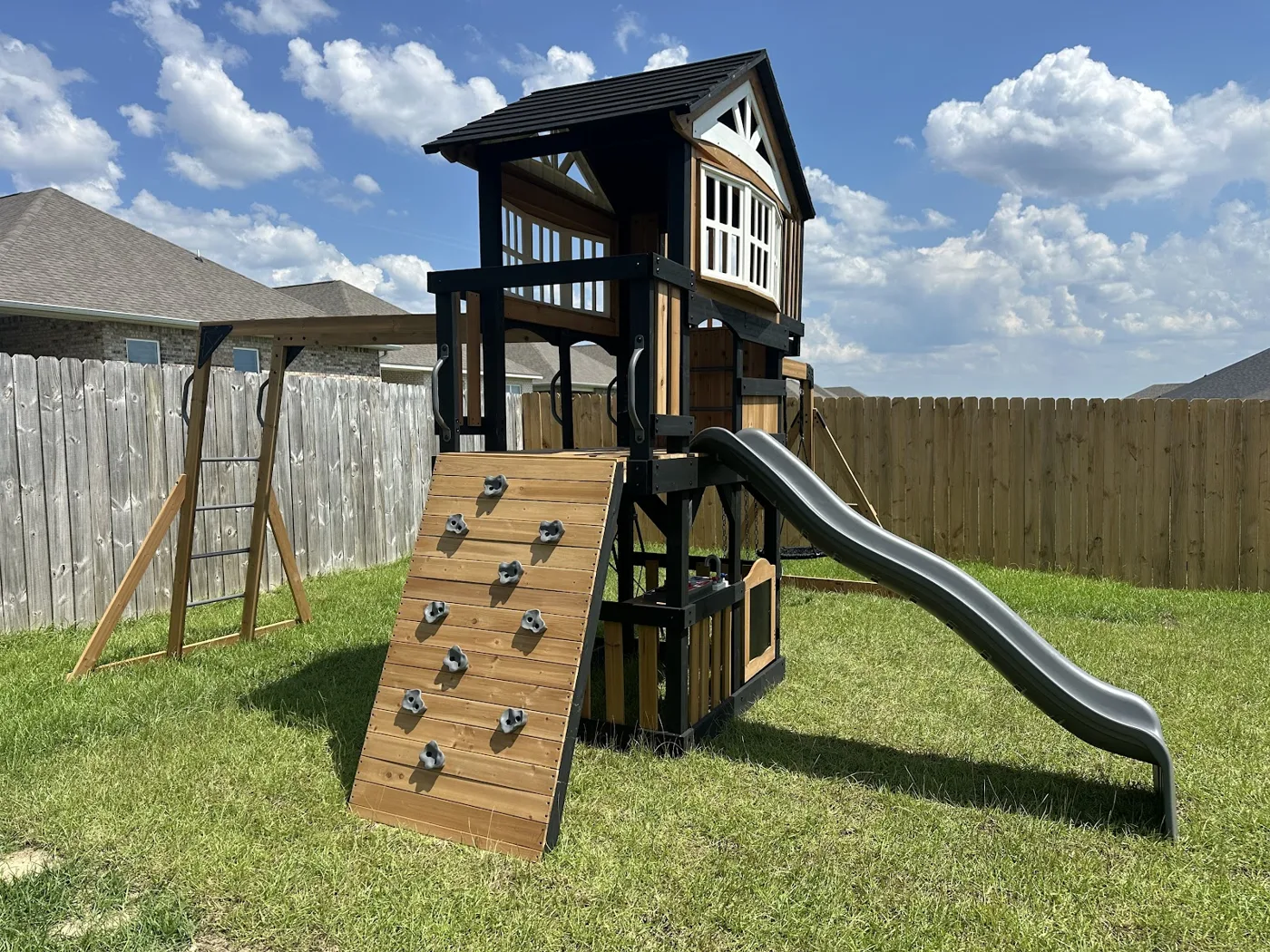
Why Choose Handychief for Playground Assembly
Customer Reviews
Assembly customer reviews — real Handychief reviews from Google.
“Wow Handy Chief assembled my solarium and did an excellent job — we’re so happy! He was on time and worked all day in the hot Florida weather. The build was very detailed and no trash anywhere.”
“Best ever! Put my 65inch smart tv up in no time! … He also has set up multiple dressers, cabinets, rising desk and sound bar.”
Related Services
Playground Assembly Service Areas
Serving Pensacola and nearby communities, including Gulf Breeze, Pace, Milton, Navarre, Cantonment, Perdido Key, and Pensacola Beach.
Playground Assembly FAQ
-
What types of playgrounds and playsets do you assemble?
Residential backyard swing sets, wooden and metal playsets, climbing structures, slides, monkey bars, play towers, and other appropriate customer-supplied playground kits.
-
Does the ground need to be level?
The installation area should be stable and suitably level according to the manufacturer’s requirements. Significant slopes or uneven ground may require site preparation before assembly.
-
Do you anchor playground equipment?
When the manufacturer requires anchoring, the specified anchoring method can be completed as part of the agreed project scope where site conditions allow. The right method depends on the specific playset and ground — there’s no one universal anchor.
-
Do you provide playground safety surfacing?
Playground assembly does not automatically include protective surfacing. Customers should follow the manufacturer requirements and applicable safety guidance for the surface and use zone around the playset.
-
How long does playground assembly take?
Timing depends on the playset size, design, component count, anchoring, site conditions, access, and crew requirements. Send the product link for an accurate project review.
-
Can you assemble large wooden playsets?
Yes — appropriate residential customer-supplied systems can be reviewed. Larger systems may require multiple installers for particular assembly stages, and that’s included in the quote up front.
-
What if pieces are missing or damaged?
We’ll identify the issue. Missing or damaged manufacturer-specific structural or safety components may need replacement before assembly can be completed correctly — they don’t get improvised substitutes.
-
What should I send for a quote?
The product link or model, dimensions, site photos, current ground or surface type, delivery status, anchoring information from the manual, access details, and your city or ZIP. Text it to (850) 556-2900 for a quote before scheduling.
A Playset in Boxes, Kids Asking Daily?
Send the product link, dimensions, and yard photos — we’ll review the manufacturer’s requirements and quote the project before scheduling.